


Drone Strike: Gunship War
4.554.00 Reviews
App Specs
- Version
- 1.7.1
- Updated On
- License
- Free
- Downloads
- 100,000+
- Developer
- VNGGames Studios
- Categories
- Action
- Platform
- Android
Screenshots
 Analysis by AppCompare
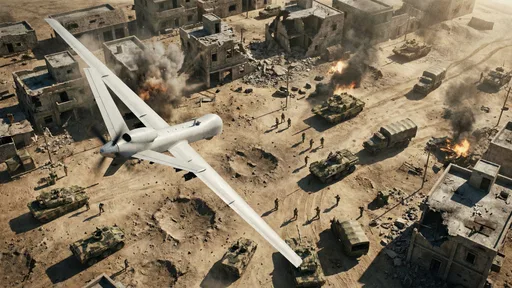
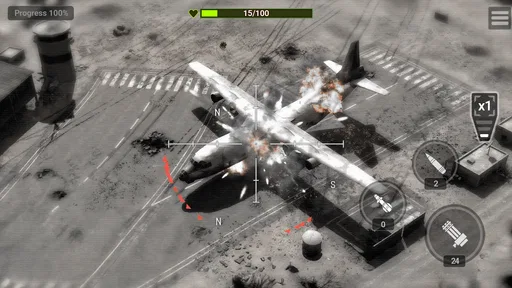
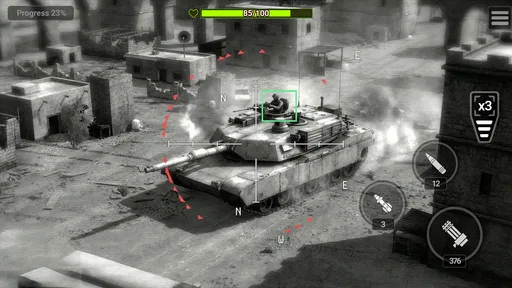
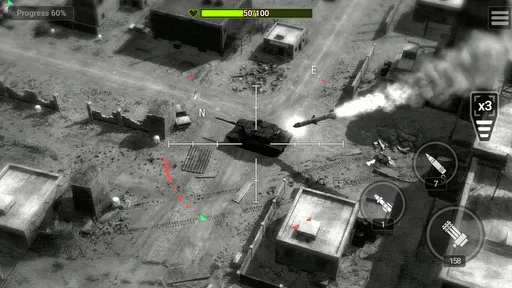
I approached Drone Strike: Gunship War expecting a quick action game built around aerial firepower, and that is exactly the kind of experience it offers: a direct, military-themed shooter focused on controlling AC130 gunships and war drones. Its appeal is easy to understand. You aim from above, choose when to attack, and try to turn each encounter into a clean strike rather than a slow, complicated strategy session.
That simplicity is both its greatest strength and its main limitation. I found it easy to pick up when I wanted a short burst of action, but players looking for a deep flight simulator, a story-heavy campaign, or a highly tactical multiplayer game may find the format too narrow. This is an action title from VNGGames Studios, available for free, with a Teen content rating and optional purchases ranging from $0.99 to $99.99 per item.
How the current version feels to play
The current release is version 1.7.0, and the game presents itself as a focused gunship-and-drone shooter rather than a broad military sandbox. That distinction matters. You are not being asked to manage an entire army, build a base, or learn a detailed aircraft cockpit. The core attraction is the moment-to-moment decision of where to aim, when to fire, and how to make your aerial weapons count.
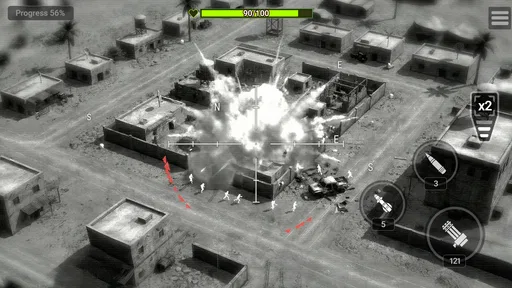
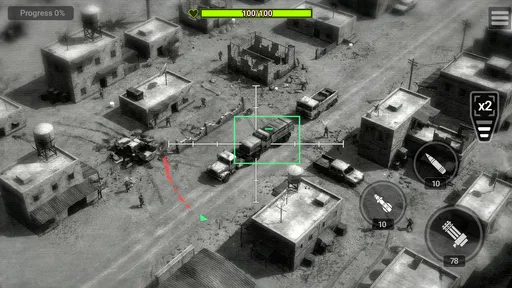
I think the best way to approach it is as a pick-up-and-play action game. It fits the kind of session where I have a few minutes free and want something more active than a puzzle but less demanding than a full-scale competitive game. The aerial viewpoint also gives the action a different rhythm from ordinary ground-based shooters. Instead of moving through corridors at eye level, I am watching the battlefield from above and treating targets as part of a larger attack picture.
The controls and objectives are designed around that immediate premise. The experience makes the most sense when I concentrate on accuracy and timing instead of trying to overthink every encounter. A careless attack can feel wasteful, while a well-placed strike gives the game its most satisfying feedback. That makes patience useful, even though the overall presentation remains fast and accessible.
One practical tip is to avoid treating every visible target as an automatic priority. In an overhead combat game, the nearest or most obvious target is not always the best one to engage first. I found it more useful to scan the scene, identify the threat that could disrupt the attack, and then commit to a strike. This small change in habit makes the game feel more tactical without requiring complicated systems.
A good fit for short action sessions
For everyday use, the game works best when I want a self-contained action break. Imagine waiting for an appointment or taking a short evening pause after work. A traditional console-style shooter may ask for too much time and attention, while a strategy game may take too long to reach a satisfying result. Drone Strike: Gunship War sits between those extremes: it offers the immediate feedback of shooting while keeping the main idea easy to understand.
Worth Reading Before You Choose

Flipboard Shows What News Apps Must Do Beyond the Feed

Switching to Android Auto Means Rethinking Your Driving Routine

Google Calendar Makes a Crowded Week Easier to Manage

Ludo King Makes the Most of the Minutes Between Plans

Baby Panda World Brings Quick Play to Modern Phones, but Its Game Library Feels Busy

ESPN’s Live Game View Makes Following Close Games Easier
It is also a reasonable entry point for someone who does not usually play military games. The AC130 and drone theme provides a clear identity, but the player does not need specialist aviation knowledge to enjoy it. I can focus on the visual battlefield, the target flow, and the timing of attacks rather than learning realistic procedures.
That accessibility should not be confused with realism. Players who want authentic aircraft handling, exact weapon behavior, or a simulation-style chain of command should look toward a dedicated flight or military simulator instead. This game is about the fantasy of commanding powerful aerial weapons, not about reproducing every technical detail of real operations.
What the developer’s current release tells me
VNGGames Studios has positioned the title clearly within the action category. The current version gives the game a defined identity instead of trying to combine too many unrelated genres. I appreciate that focus because it helps me understand what I am downloading before I start: this is not a role-playing game disguised as a shooter, and it is not a city-building game with a few aircraft missions attached.
The game has reached more than 100 thousand installs and holds a 4.6 average from around 1.6 thousand ratings. Those figures suggest that the central concept connects with a meaningful group of players, while the comparatively compact review footprint tells me not to assume that the game has the same depth or maturity as the biggest names in mobile action. I would treat the positive response as encouragement to try it, not as proof that it will suit every player.
The release date is July 28, 2026, and that makes version 1.7.0 especially relevant when judging the current state. I would pay attention to how future updates refine the basic shooting loop rather than expecting the game to suddenly become a different genre. Improvements that make aiming clearer, missions more varied, or progression more satisfying would strengthen what is already there.
For anyone using an older device, the minimum requirement is Android 6.0. That gives the game a broad compatibility range, although compatibility alone does not guarantee an identical experience on every phone or tablet. Screen size, touch response, and device performance can all influence how comfortable aerial aiming feels. I would test the controls early, before deciding whether the game deserves a permanent place on my device.
Where the game succeeds and where it still needs work
I find the most useful way to judge this game is to separate its immediate appeal from its staying power. Its aerial viewpoint gives each attack a clear sense of purpose, while the focused format makes it easy to try without committing to a long session. I’d also weigh that simplicity against how much variety I personally need, since a satisfying first impression does not automatically mean the same loop will hold my attention over time.
The strongest part is the clear combat fantasy
The most convincing element is the fantasy of directing firepower from above. Many mobile shooters place the player directly in the action, but this title creates distance between the player and the battlefield. That distance changes the emotional feel. I am not simply running toward an opponent; I am evaluating a scene and deciding how to apply force from an advantageous position.
That perspective also creates a useful trade-off. Being above the action can make targets easier to survey, but it can also make individual threats feel less personal. If you prefer close-range tension, character movement, and weapon swapping, a conventional first-person or third-person shooter will probably deliver more excitement. If you enjoy seeing an encounter as a complete tactical picture, the aerial format is more distinctive.
Another non-obvious advantage is that the theme naturally supports deliberate play. Even when the game is fast, the gunship viewpoint encourages me to think in terms of attack windows. I can use a short pause to observe instead of firing immediately. That habit is particularly helpful for players who become frustrated by games that reward constant movement but offer little room for planning.
The free entry point comes with a spending decision
Because the game is free to download, it is easy to test without committing money at the start. That is valuable for a niche action concept: I can discover whether aerial targeting feels comfortable before paying for anything. The presence of in-app purchases, however, means I would approach the progression carefully and decide in advance whether I am willing to spend.
The available purchase range runs from $0.99 to $99.99 per item. I would not recommend buying immediately just because a difficult encounter slows progress. First, I would learn the targeting rhythm, check whether a different approach solves the problem, and see how far the free experience takes me. Spending can make sense for someone who already enjoys the core loop and wants to support continued play, but it is less sensible for a curious player who is still deciding whether the format has enough variety.
This is also where the game may lose players who dislike free-to-play pressure in any form. Even when optional purchases are handled reasonably, their presence can change how I evaluate difficulty and progression. I want to feel that improved timing and better decisions matter, not only stronger equipment. Anyone sensitive to that balance should keep a close eye on the early experience and avoid treating purchases as the default solution to every obstacle.
What existing players should expect from version 1.7.0
For an existing player, the important point is that version 1.7.0 represents the current state rather than a promise about the future. I would judge it by the quality of the central gunship and drone action available now, not by assuming that later updates will add systems that are not currently part of the experience.
That is a useful mindset for a game with a focused premise. If I already enjoy the aerial combat, a current-version update can be worthwhile because small improvements to the core loop may have a noticeable effect. Better clarity during attacks, smoother interaction, or more satisfying progression would matter more to me than a long list of decorative additions.
On the other hand, players who have already exhausted the basic appeal may need more than refinements. The game’s long-term value depends on whether the action continues to feel fresh after the initial novelty of commanding an AC130 or drone wears off. I would watch for meaningful variety in encounters and objectives, because repeated targeting without new decision-making can become predictable.
The gaps that may affect your decision
The first gap is depth. The game’s focused design makes it approachable, but it also means that players seeking a layered campaign or a broad collection of modes may find fewer reasons to stay. I would choose it for its central aerial-strike idea, not because I expect it to replace every other action game on my phone.
The second gap is the distance between spectacle and personal involvement. Watching attacks unfold from above can feel powerful, but it may not provide the same attachment as controlling a named character with a detailed loadout and movement system. That is not a flaw for everyone; it is simply a question of what kind of action feels rewarding to you.
The third gap is the uncertainty that naturally comes with a developing release. A version number tells me which build I am using, but it does not by itself guarantee how much new content will arrive later. I would therefore recommend the game based on its present identity: a free aerial action shooter with optional purchases, not on expectations of a future transformation.
Who should play it, and who should skip it
I would recommend it to players who like military themes, overhead targeting, and compact action sessions. It is particularly suitable for someone who wants a game that can be understood quickly but still rewards better timing and target selection. The Teen rating also makes it more appropriate for older players than for young children, especially given the combat-focused subject matter.
I would skip it if your priority is a realistic flight simulator, a rich narrative campaign, or a competitive shooter built around direct character control. I would also be cautious if you dislike in-app purchases or prefer games with a clearly finished, premium structure. In those cases, a paid action game or a simulation-focused alternative may provide a better match, even if it lacks the immediate accessibility of this title.
My practical advice is to give the free version a fair trial without spending during the first sessions. Concentrate on whether aiming from the aerial viewpoint feels natural, whether the attack decisions remain interesting, and whether the pace suits your normal play habits. If those three answers are positive, the game has earned a place in your rotation. If the basic targeting loop already feels repetitive, purchases are unlikely to solve the underlying mismatch.
What I would watch in future updates
The most important area to watch is variety that changes how I think, not merely how the battlefield looks. New situations are valuable when they ask me to alter target priorities, timing, or weapon choice. Cosmetic changes may improve presentation, but they will not address the main question of whether the core aerial combat remains engaging over time.
I would also look for a clearer sense of progression. The best version of this concept should make each session feel connected to the next without turning advancement into a reason to spend. A satisfying progression path would reward learning the game’s attack rhythm and give returning players a reason to refine their decisions.
Finally, I would pay attention to how the developer balances accessibility with challenge. The game benefits from being easy to understand, but it should still give experienced players meaningful ways to improve. If future releases preserve the quick entry while adding more demanding tactical choices, Drone Strike: Gunship War could become more than a brief novelty.
My overall opinion is positive but measured. This is a clearly defined action game with a memorable aerial perspective, a free starting point, and enough tactical timing to make the shooting feel more thoughtful than a simple tap-and-repeat experience. Its limitations are equally clear: the focused format may not offer enough depth for serious simulator fans or players who need a large, constantly changing game world.
I would recommend trying it when you want accessible gunship and drone action rather than a complete military simulation. Start slowly, learn to scan before striking, and judge the game by how much decision-making the current version gives you. For the right player, that focused approach is the reason to play; for everyone else, it is the clearest reason to move on.
Pros
- Intuitive controls make flying and aiming easy for beginners.
- Short missions fit well into quick gaming sessions.
- Multiple aircraft provide variety in combat style.
- Offline play is useful when no internet connection is available.
- Clear objectives help players understand each mission quickly.
Cons
- Mission objectives can become repetitive after extended play.
- Some upgrades may require considerable grinding to unlock.
- On-screen controls can feel cramped on smaller phones.
- Enemy behavior is sometimes predictable during combat.
- Ads may interrupt the experience between missions.
FAQs for Drone Strike: Gunship War
What is Drone Strike: Gunship War about?
Drone Strike: Gunship War is an action-focused combat game centered on aerial attacks, military missions, and battlefield strategy. Players control powerful gunships or drone-style aircraft, target enemy units, and complete objectives across different combat scenarios. The game is designed for users who enjoy quick missions, explosions, weapon upgrades, and a straightforward military arcade experience on mobile devices.
Is Drone Strike: Gunship War free to download and play?
The game can generally be downloaded without an upfront purchase, allowing players to try its main missions and combat mechanics at no initial cost. However, free mobile games may include advertisements, optional in-app purchases, or upgrade systems that can affect progression speed. Before downloading, check the current store listing for pricing, supported purchases, and any regional differences.
Does Drone Strike: Gunship War require an internet connection?
Whether the game works fully offline can depend on the version and the device being used. Basic gameplay may be available without a constant connection, but advertisements, saved progress, updates, analytics, or certain features can require internet access. If offline play is important to you, test the game after installation with mobile data and Wi-Fi disabled.
What devices are compatible with Drone Strike: Gunship War?
Compatibility depends on the operating system, hardware requirements, and the version published in the Android or iOS store. Devices with a modern operating system and reasonable graphics performance should provide the best experience, especially during action-heavy missions. Older phones or tablets may experience slower loading, reduced visual quality, overheating, or occasional performance issues.
Does the game contain ads or in-app purchases?
Drone Strike: Gunship War may use advertising and optional purchases as part of its free-to-play model. Ads can appear between missions or when players choose bonus rewards, while purchases may provide currency, weapons, upgrades, or other progression advantages. These features are not necessarily required to play, but they can influence the pace of advancement and overall experience.


